
Northern Lights Ohio Tonight — How to Actually See Them and Where to Go
Nobody expects to see the northern lights from Ohio. That’s exactly why, when it happens, it stops people cold.
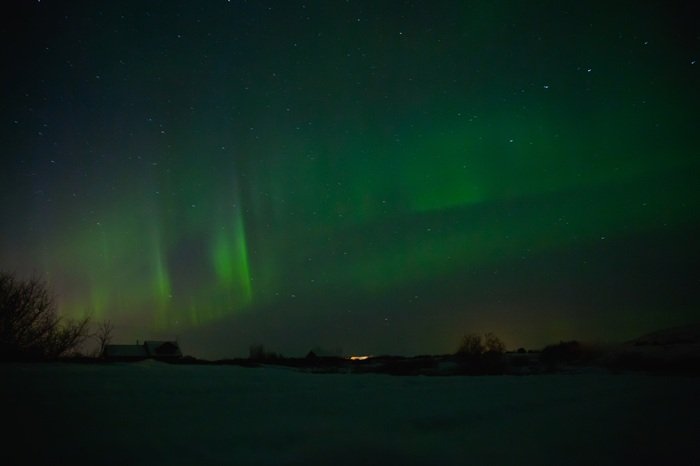
In May 2024, a severe geomagnetic storm — rated G5, the highest level on the NOAA scale — pushed the aurora borealis so far south that it was visible across nearly the entire continental United States, including Ohio. Social media lit up with photos from cornfields outside Columbus, lakeshores near Cleveland, and dark country roads in rural Hocking Hills. For one night, Ohio became an unlikely front-row seat to one of nature’s most dramatic light shows.
And it wasn’t a one-time fluke. Solar activity is currently near the peak of Solar Cycle 25, which scientists at NASA and NOAA have tracked as one of the more active cycles in recent decades. That means the northern lights Ohio tonight — and on multiple future nights — are a genuine possibility worth preparing for.
The reason for this is that the Great Lakes State, Ohio, can see the Aurora Borealis at all.
The aurora borealis is a result of the collisions between charged particles from the sun and gases in Earth’s atmosphere. The aurora occurs normally only in regions of high latitude near the Arctic with normal solar activity. However, on days of high geomagnetic activity, auroral ovals expand as far south as they can reach — which is sometimes quite far.
The latitude of Ohio is approximately 40-42 degrees north. For storms of G3 strength or higher, there is potential for aurora sightings throughout the state. At a G4 or 5 event (such as the storm in May, 2024) it is practically assured to anyone with a dark enough site.
NOAA’s Space Weather Prediction Center provide real-time aurora forecasts and measure geomagnetic activity with a Kp index. Ohio’s northern counties (Lake) will normally see aurora sightings when Kp is 5 or greater. A Kp of 7 or higher sends it throughout the state.
Where to Go in Ohio for the Best View Tonight
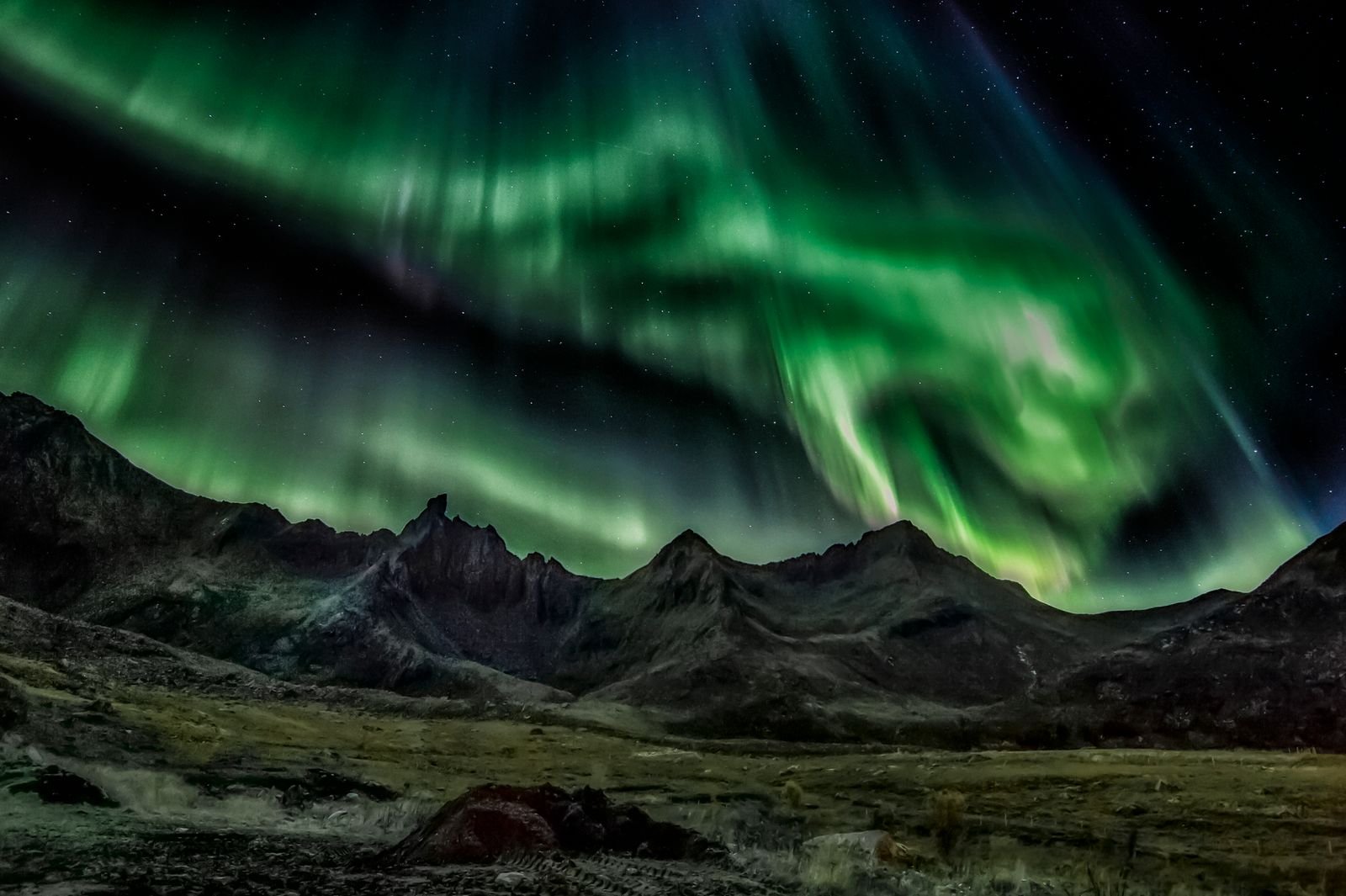
Light pollution is your biggest enemy. Standing in a Columbus suburb and looking north will get you nothing but orange sky glow. You need dark sky — and Ohio actually has several accessible options.
Hocking Hills region in southeastern Ohio offers some of the darkest skies in the state. The rolling terrain and low population density make it one of the best spots for any kind of stargazing, aurora included. Pull off on Route 664 heading south from Logan and look north.
Lake Erie shoreline — particularly the areas around Geneva State Park and Headlands Beach State Park in Lake County — gives you an open northern horizon directly over the water, which is ideal for aurora viewing. The lake itself reflects the lights when the display is strong enough.
Mohican State Forest in Ashland County is another consistently dark location within a two-hour drive of most of Ohio’s major cities.
Avoid Friday and Saturday nights in tourist areas — the parking lots fill up fast when a storm alert goes out.
Teresa B., 61, a retired schoolteacher from Akron, drove 40 minutes to the Lake Erie shoreline during the May 2024 event: “I’ve lived in Ohio my whole life and never thought I’d see this here. It looked like someone had spilled pink and green watercolors across the whole sky. I stayed for two hours and cried twice. I’m not even embarrassed about it.”
How to Know If the Northern Lights Are Visible in Ohio Tonight
Three things to check before you drive anywhere:
Kp Index Forecast — NOAA’s Space Weather Prediction Center updates aurora forecasts every 30 minutes. Bookmark their 3-day forecast page. A Kp of 5 is your minimum threshold for northern Ohio. Aim for 6 or higher if you’re in central or southern Ohio.
Cloud Cover — The aurora can be blazing above you and completely invisible if you have cloud cover. Check a local weather radar, not just a general forecast. Clear skies are non-negotiable.
Solar Wind Speed and Bz Component — This sounds technical but takes about 30 seconds to learn. The Bz component measures the direction of the interplanetary magnetic field. When Bz goes strongly negative (minus 10 or lower), aurora activity intensifies rapidly. NOAA’s real-time solar wind data updates constantly and is the most reliable short-term predictor available.
Camera Settings for Photographing the Northern Lights in Ohio
Your phone may surprise you. Modern smartphones — particularly iPhone 15 Pro and Google Pixel 8 series and newer — perform remarkably well in low-light astrophotography when you use Night Mode or Pro mode with manual settings. Aim for ISO 1600 to 3200, a shutter speed of 10 to 20 seconds, and the widest aperture your lens allows.
If you have a DSLR or mirrorless camera, shoot in RAW format. The aurora in Ohio often appears faint pink or white to the naked eye but renders as vivid green and purple in long-exposure photographs — so even a modest display can produce a striking image.
FAQs About Northern Lights Ohio Tonight
Q: How often can you see the northern lights in Ohio?
Under normal solar conditions, once or twice a year during strong geomagnetic storms. But with Solar Cycle 25 near its peak through 2025 and into 2026, Ohio has been experiencing more frequent aurora events than in the previous decade. Several significant displays occurred in 2024 alone.
Q: What time of night is best to see the northern lights in Ohio tonight?
Aurora activity typically peaks between 10 p.m. and 2 a.m. local time, though strong storms can produce displays earlier in the evening. Midnight is generally your best single hour if you can only stay out for part of the night.
Q: Do I need special equipment to see the northern lights in Ohio?
No. During a moderate to strong geomagnetic storm, the aurora is visible to the naked eye from a dark location. Binoculars can enhance the detail and color, and a camera on a tripod will capture far more color than your eye sees directly.
Q: Can you see the northern lights from Columbus or Cleveland?
From Cleveland, yes — during a G4 or G5 storm, there have been confirmed naked-eye sightings from darker neighborhoods and lakefront parks. Columbus has more light pollution and generally requires driving 30 to 45 minutes south or east toward darker skies before aurora becomes visible.
Q: Is there an alert service for northern lights in Ohio tonight?
Yes. NOAA’s Space Weather Prediction Center offers email and text alerts for geomagnetic storm watches and warnings. Several third-party apps including SpaceWeatherLive and My Aurora Forecast aggregate the same NOAA data with user-friendly interfaces and push notifications.
Ohio is not the first place that comes to mind when people think about the aurora borealis — and that’s part of what makes seeing the northern lights Ohio tonight feel so unexpectedly personal. You don’t need to book a trip to Iceland. Sometimes all you need is a dark road, a clear sky, and the right night.
Keep exploring: Best Place for Northern Lights · Northern Lights Tonight NYC · Aurora Borealis in Oregon · What Time Is the Lunar Eclipse?
Further reading: NOAA Space Weather Prediction Center · Aurora — Wikipedia