
Here is a question every flight booker faces and few answer deliberately: the seat you want exists in two shops. The airline sells it directly. A booking platform sells it too — possibly with a discount code attached, like a TTweakFlight code. The flight, the seat and the sandwich are identical. Only the shop differs. So which shop saves you more?
The honest answer is “it depends” — but not in the useless way. It depends on identifiable things: how likely your plans are to change, what happens when the airline disrupts the flight, whether you collect points, and how big the code’s saving really is after arithmetic. This comparison scores both channels round by round, then gives you the simple rule experienced travellers actually use.
Round 1: The headline price
This is the platform’s home turf. A booking site can discount from its own commission, run platform-funded promotions, and layer a code on top — so on a straightforward price check, the platform-plus-code often wins by a small margin: typically the value of the code (remember from our look at the airline truth about discount codes — codes bite on the base fare only) plus whatever the platform shaves off.
But check the totals like a strategist, not a spectator. Platforms sometimes add a service fee at the final step, price bags differently, or show the seat-selection cost later. The airline’s own site occasionally matches with a “direct booking” perk — free seat selection, a small fare discount, or a member price that quietly equals the code. Rule of the round: compare final totals with identical bags and seats, and the platform wins this round only when it is actually cheaper at the payment screen.
Round 1 verdict: Platform + code, usually by a nose — when the totals are honest.
Round 2: Changes and cancellations
Now the ground shifts. Change a direct booking and you deal with the airline: one system, one set of rules, changes often self-service in the app. Change a platform booking and you enter a relay race — you call the platform, the platform contacts the airline, fare rules pass through an intermediary, and some platforms add their own change fee on top of the airline’s.
Refund timing differs too: the US Department of Transportation’s consumer rules govern refunds for cancelled flights, but chasing them through an agent adds weeks and friction that direct bookers never meet. None of this matters if nothing changes — and plans change constantly: meetings move, relatives get ill, better dates appear. Our explainer on how Travel Tweaks bookings work shows what a reservation really controls in each system.
Round 2 verdict: Direct, clearly. The more likely a change, the more a small code saving is worth nothing.
Round 3: Disruption day — delays, cancellations, strikes
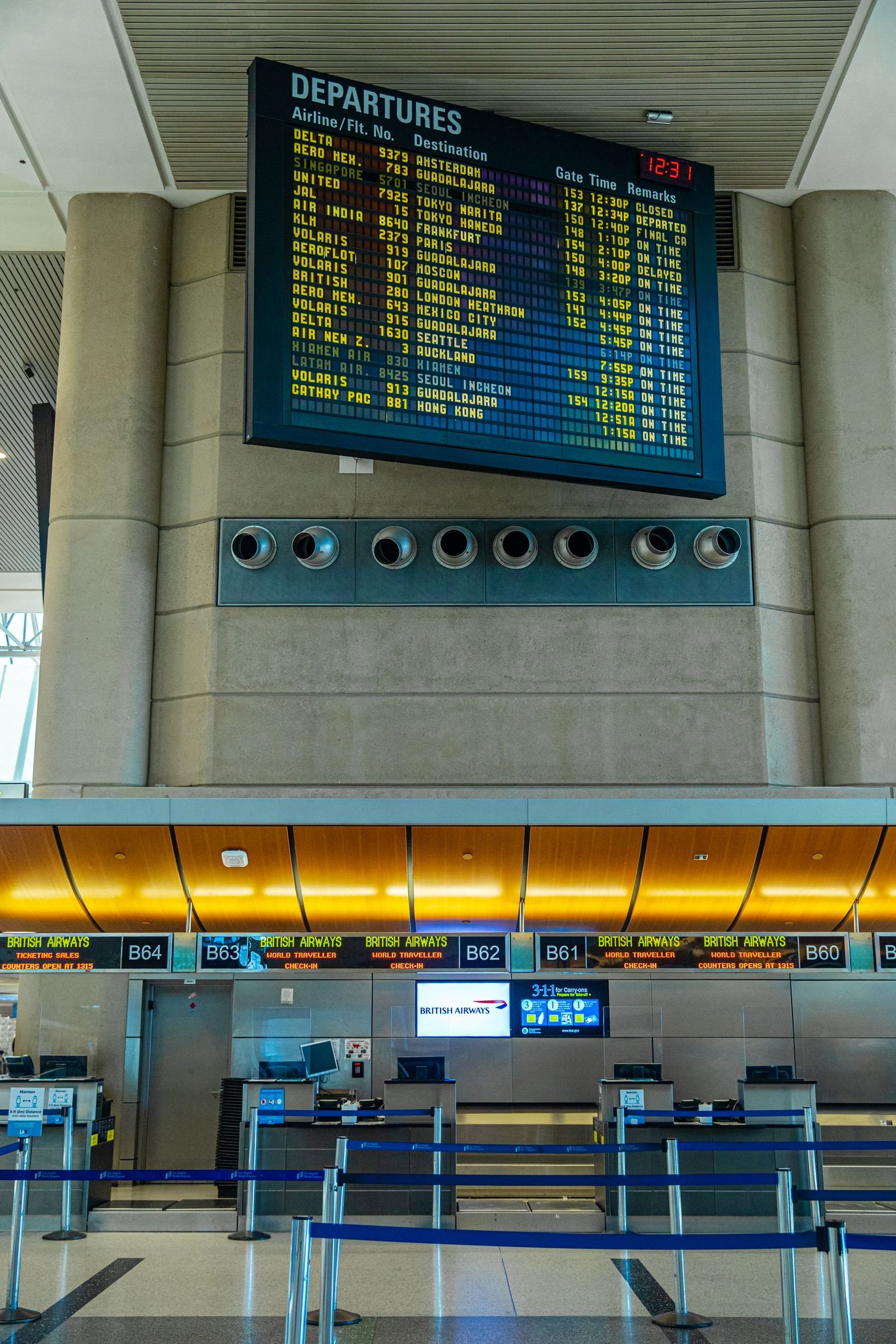
This is the round travellers only think about after it burns them. When a flight is cancelled or a strike empties the departure board — the chaos our guide to airline strikes walks through — the airline rebooks its own direct customers first, because they are visible in its system with contact details it controls. Platform customers get rebooked too, but through the platform’s queue, sometimes hours later, sometimes after the good alternatives are gone. At the airport, the check-in desk can usually fix a direct booking on the spot; a platform booking may earn you the sentence nobody wants at midnight: “You’ll need to contact your travel agent.”
Round 3 verdict: Direct, by a distance. On routes and dates with disruption risk, this round outweighs any code.
Round 4: Loyalty points and status
Book direct and the flight credits cleanly to your frequent-flyer account, counting toward status. Book through a platform and some fares still credit — but the cheapest third-party fare classes sometimes earn reduced points or none, and fixing a missing credit later is paperwork archaeology. If you are chasing status or pooling family points, that silent loss can exceed the code’s saving. If you fly an airline once and will never use its points, the round is a draw.
Round 4 verdict: Direct for collectors; irrelevant for once-a-year flyers on random airlines.
Round 5: Support when something odd happens
Name misspelled by one letter. A schedule change that breaks your connection. A duplicate charge. With a direct booking, one company owns the problem and the ticket. With a platform, the airline says the agent owns the booking and the agent says the airline owns the fare — the classic gap the Federal Trade Commission’s consumer advice warns about in intermediated purchases generally. Good platforms do exist and handle problems well; the point is that you cannot know yours is good until the day you need it, while the airline’s responsibility is structural.
Round 5 verdict: Direct, unless your platform has proven itself to you before.
The scoreboard — and the rule that settles it
| Platform + code | Direct with airline | |
|---|---|---|
| Headline price | Often slightly cheaper | Sometimes matches via member perks |
| Changes/cancellations | Slower, possible extra fees | Fast, self-service |
| Disruption handling | Via the agent’s queue | Airline’s own priority |
| Points & status | Sometimes reduced | Full and automatic |
| Problem ownership | Shared (gap risk) | Single owner |
And here is the rule that resolves the table into a decision — the same one at the heart of our smarter flight booking strategy:
- Simple trip, fixed plans, no status at stake, code saving is real money (not 1–2%)? Take the platform + code saving.
- Plans might move, the route is disruption-prone, you collect points, or the saving is tiny? Book direct. You are not overpaying; you are buying the better insurance policy, and it costs less than most insurance.
The bottom line
“Which saves more?” turns out to be two questions. On the day of booking, a TTweakFlight-style code on a platform often saves a little more cash. Across the whole life of the trip — changes, disruptions, points, problems — direct booking quietly saves more of everything else. Smart travellers do not marry a channel; they price both, run the five rounds in about two minutes, and let the trip in front of them decide. That is what saving money actually looks like.