
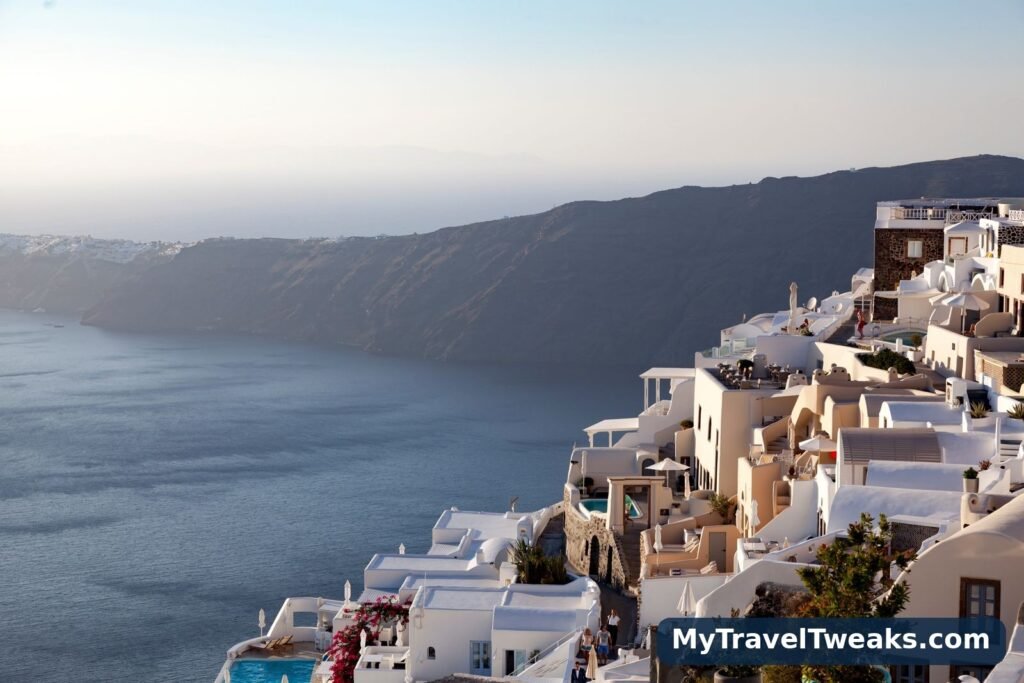

Romance changes what a route is for. On an ordinary trip, the best route is the one that fits the most in; on a honeymoon, the best route is the one that leaves the most room — room for a long lunch, a wrong turn that turns into a village neither of you will forget, an evening that starts at a viewpoint and ends whenever it ends. The TTweakMaps guides for honeymoon and romantic destinations are built around that difference. They cover the same ground as the general guides, but they grade it by a different standard: not what is there, but what it feels like to be there together, at that hour, at that pace. This article sets out exactly what that coverage includes. If the guides themselves are new to you, our walkthrough of map guides TTweakMaps — from the first search to the final destination — explains the underlying method.
Romantic routes: the drive is the destination
The core of the coverage is a set of romantic routes: drives and slow journeys chosen because the travelling itself is the experience. Italy’s Amalfi Coast and Tuscany’s vineyard lanes, the Loire’s château roads, Scotland’s glen routes, the Pacific Coast Highway, Japan’s coastal roads between onsen towns — each is documented stage by stage, but with the honeymoon grading applied. Stages are shorter than a sightseeing itinerary would make them. The overnight towns are picked for their evenings, not their monuments. And every route marks the difference between the fast road and the beautiful one, with the honest time cost of beauty stated in minutes, so the choice is yours rather than the algorithm’s.
Sunset stops, timed honestly
Every romantic guide carries a layer ordinary maps do not: light. Viewpoints, beaches and terraces are marked with the hour they are actually worth — golden hour on a west-facing coast, sunrise on an east-facing one — and the guides are blunt about the famous spots where the sunset crowd destroys the thing you came for, with the quieter alternative viewpoint marked a few hundred metres away. On Santorini, for example, the guide walks you to the caldera viewpoints beyond the Oia crush and times the walk so you arrive as the light turns, not after it.
Island pairs: two islands, one trip
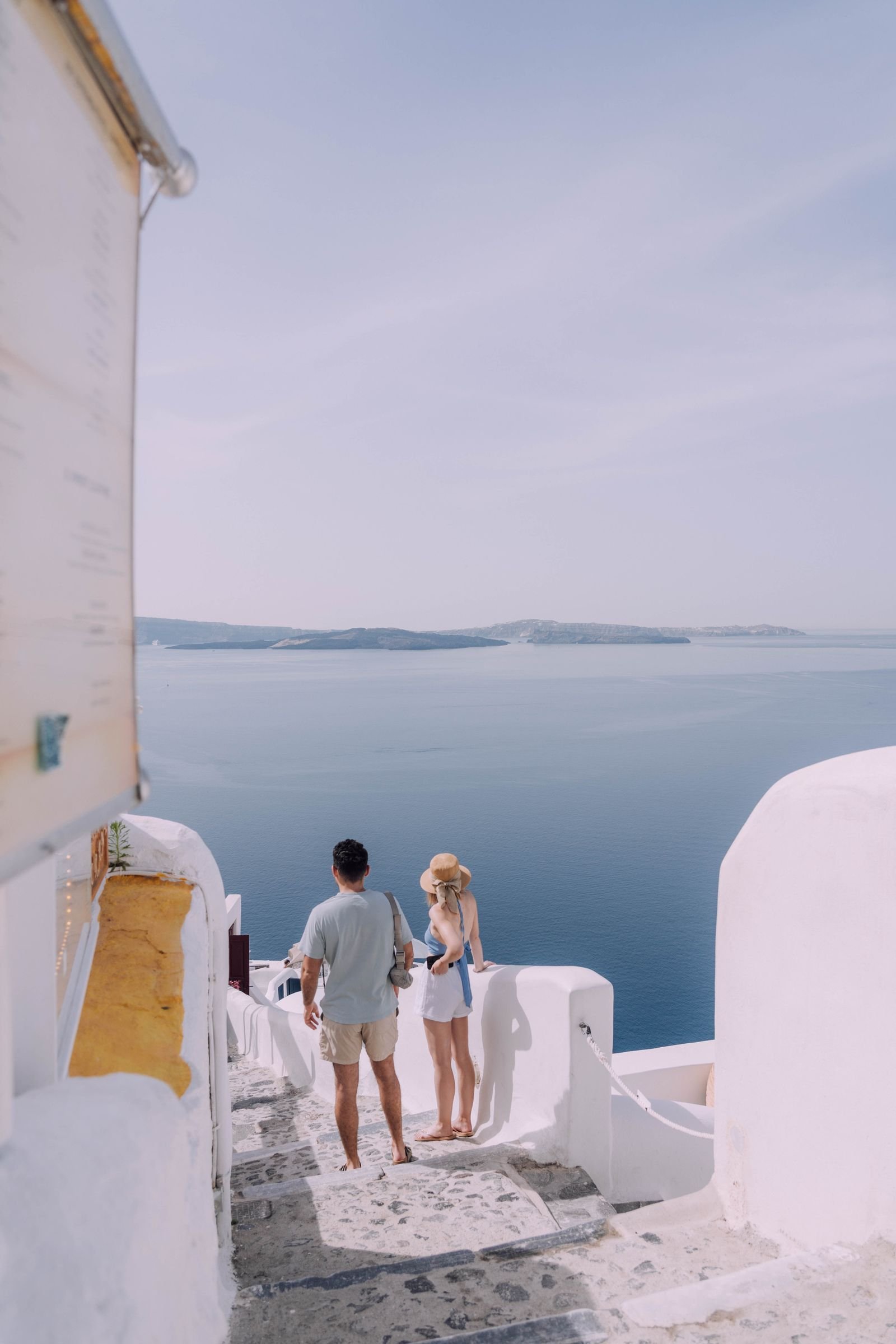
Honeymoons love islands, and islands love company. A signature part of the coverage is the island pair: two islands close enough to combine, different enough to justify both, with the hop between them documented as carefully as a road stage — ferry or flight, how long it really takes door to door, and which order to visit them in so the trip ends on the quieter, more romantic note. Santorini with Naxos or Milos, Bali with the Gilis, a Maldives resort island paired with a local island, Maui with Lanai: each pair is covered with the transfer reality included, because a badly planned hop is the single most common way an island honeymoon loses a day and its temper with it.

Planning a honeymoon route: pace, bases and breathing room
The guides also carry planning notes written specifically for two-person trips. The central advice is about pace: one base with day trips beats four hotels in seven nights almost everywhere, and each route states its minimum unhurried time — the days below which the trip becomes a transfer schedule with scenery. Routes mark where a rest day earns its place (usually after the longest transfer), where a splurge night sits best in the sequence, and how the route pairs with accommodation, which is why the current Travel Tweaks offers are worth checking against your overnight towns before you book. Couples planning further afield will find the same method applied on other continents — our companion guide to the map guide TTweakMaps by TravelTweaks for African destinations covers safari honeymoons and the routes behind them. And if you are still orienting yourself on the site, the directions on how to get to MyTravelTweaks will point you to every guide family from one page.
Seasons: the same route is not the same trip
Romantic coverage is also seasonal in a way sightseeing rarely admits. Each route carries the months when its light, water and temperature align: the Greek islands in late May and September rather than the August crush, the Maldives in the dry months when the lagoons are glass, Tuscany when the harvest turns the hillsides gold. Where a destination’s famous season is actually its worst for couples — crowded, expensive, hurried — the guide says so and marks the shoulder-season window that delivers the same place at half the pressure.
What the romantic guides do not do
Honesty, as always, in one list. The guides do not book anything, rate hotels or promise that a viewpoint will be empty — they plan routes, and the romance itself remains stubbornly un-automatable. They do not cover proposal logistics beyond marking the spots travellers consistently choose for the question. And they do not pretend every famous romantic destination deserves its fame: where a place is overcrowded, overpriced or living on reputation, the guide says so and routes you to the alternative that delivers what the famous name only advertises.
A honeymoon has exactly one requirement: that nothing goes wrong enough to be remembered. This guide is built around that — the quiet clusters, the reliable seasons, the routes with no bad surprises and the stages that leave room for the trip to breathe. Choose the destination the map describes as calm, travel it as written, and the only thing you will need to plan is the rest of your lives.