
Good Places to Go in South America — A Practical Guide for U.S. Travelers in 2026
My friend Elena spent six months talking about going to South America before she finally booked. The continent felt too big, too complicated, too hard to narrow down. Peru or Argentina? Colombia or Chile? Two weeks or four? She paralyzed herself with options until a coworker sat her down and said: “Start with Peru. See Machu Picchu. Go from there.”
She did. And she’s been back three times since — each trip adding a new country, a new layer of the continent she now considers her favorite travel region on Earth.
That first decision — picking a starting point — is the hardest part of planning a South America trip. This guide cuts through the noise and gives U.S. travelers a clear map of the genuinely good places to go in South America based on what each destination actually delivers.
Peru — The Strongest Starting Point
Peru is the most popular starting point for a reason. It combines two of the continent’s most iconic experiences, Machu Picchu and Cusco, with excellent tourism infrastructure, a world-class food scene centered on Lima, and a range of landscapes from the Amazon to the Andes.
Machu Picchu sits nearly 8,000 feet above sea level in a tropical Peruvian forest. It is one of the good places to go in South America that fully justifies its reputation — few experiences in travel match the first view of the citadel emerging from morning mist. Access is either by train to Aguas Calientes or by trekking the 26-mile Inca Trail, though many experienced guides recommend alternative treks like the Salkantay for less congestion and equally spectacular scenery.
Lima deserves more of the itinerary than most first-timers give it. The city’s Miraflores and Barranco neighborhoods house a restaurant scene that has produced multiple entries on the World’s 50 Best Restaurants list in recent years. Budget two full days for Lima minimum — arriving the night before and rushing to Cusco the next morning is one of the most common Peru mistakes U.S. travelers make.
In 2026, smart travelers can pair a visit to Machu Picchu with the Inti Raymi — the Festival of the Sun — which takes place on June 24 in nearby Cusco. It is one of the most spectacular cultural events in South America and draws visitors who plan their entire trip around it.
Colombia — The Surprise That Keeps Delivering
Colombia is another strong first-timer choice, particularly Cartagena and Medellín, for its warm people, easy domestic connections, and incredible variety packed into a relatively compact country.
Cartagena’s walled colonial city is one of the most photogenic urban environments in the Western Hemisphere — pastel-painted buildings, bougainvillea spilling over balconies, and Caribbean heat that makes the rhythm of the place feel unhurried and deliberate. It rewards slow movement: the best mornings are spent getting intentionally lost inside the walls.
Medellín has become one of the genuinely good places to go in South America for travelers who want urban energy alongside outdoor adventure. Just two hours from Medellín, the lakeside town of Guatapé delivers one of Colombia’s most surprising experiences — a lakeside town that feels like stepping into a storybook where every building is painted in bright blues, yellows and greens and decorated with intricate murals and vibrant zócalos.
Argentina and Buenos Aires — For Culture and Food
Buenos Aires is consistently described as one of the best cities in all of South America — a European-influenced metropolis with world-class steakhouses, a serious wine culture, tango in the streets of San Telmo, and architecture that rivals anything in Spain or Italy.
The practical case for Buenos Aires: non-stop flights from Miami, New York, and Dallas make it one of the most accessible South American capitals from the U.S. A strong U.S. dollar exchange rate means the city delivers exceptional value — high-quality restaurants, boutique hotels, and cultural experiences at prices that feel generous compared to equivalent European cities.
Pair Buenos Aires with Iguazu Falls — a four-hour flight north — and you have two of the most distinct and spectacular experiences on the continent in a single trip. The mighty Iguazu Falls straddle the border between Argentina and Brazil and are consistently ranked among the most impressive natural spectacles on Earth.
Chile and Patagonia — For the Landscape Obsessed
Patagonia feels untouched. Mountains rise like stone cathedrals, glaciers shift with ancient patience, and wind moves through wide plains that feel endless.
Torres del Paine National Park in Chilean Patagonia is the centerpiece — a hiking destination that draws serious trekkers from around the world for its granite towers, glacial lakes, and resident wildlife including condors, pumas, and guanacos. The W Trek is the most popular multi-day route, running approximately four to five days through the park’s most dramatic terrain.
The Atacama Desert in northern Chile is the counterpoint — the driest non-polar desert on Earth, with stargazing conditions that produce some of the clearest night skies accessible to travelers anywhere. San Pedro de Atacama is the base town, small and walkable, with day trips to salt flats, geysers, and lagoons that look like they belong on another planet.
Bolivia — The Salt Flats That Earn Every Travel Photo
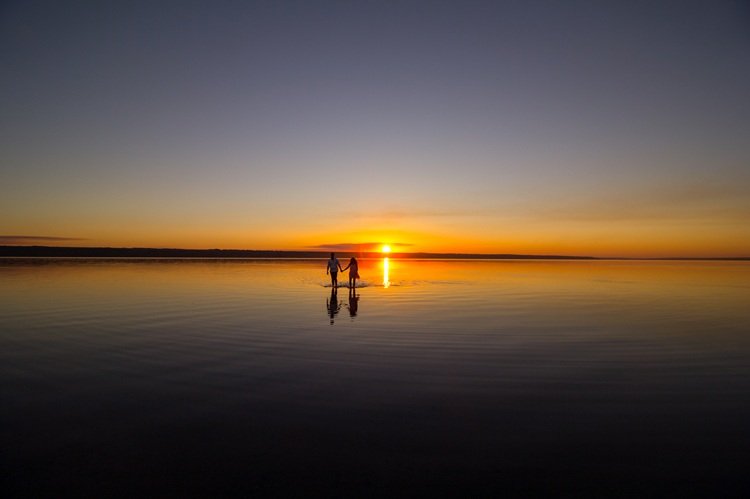
Uyuni feels almost dreamlike. Its shimmering white expanse offers sunrise colors and reflective scenes that feel more like art than nature.
The Salar de Uyuni — the world’s largest salt flat at over 4,000 square miles — is one of the most photographed landscapes in South America and one of the genuinely good places to go in South America for travelers who want something they’ve never seen before. During the rainy season between November and April, a thin layer of water transforms the flats into a perfect mirror reflecting the sky — the image that fills most Instagram feeds.
Bolivia is also the most budget-friendly destination on this list by a meaningful margin — accommodation, food, and transport costs run significantly lower than Peru or Argentina, making it an ideal addition to a longer South American itinerary.
The Practical Planning Framework
South America rewards travelers who think in combinations rather than single destinations. Three proven itinerary frameworks for U.S. travelers:
The Classic Two-Week Loop: Lima → Cusco → Machu Picchu → Buenos Aires. Covers Peru’s highlights and Argentina’s best city with manageable flight connections.
The Adventure Route: Bogotá → Medellín → Cartagena → Lima → Cusco. Colombia plus Peru in two weeks — high variety, manageable pace, strong domestic flight connections throughout.
The Southern Cone Deep Dive: Buenos Aires → Iguazu Falls → Santiago → Atacama → Patagonia. Best for travelers with three weeks or more who want Chile and Argentina in depth.
Real Travelers, Real Reactions
“I went to South America for the first time last year — two weeks in Peru. Lima surprised me more than Machu Picchu, which is saying something. The food scene alone was worth the flight. I’m going back for Colombia in the fall.”
— Elena R., first-time South America traveler, New York
“We did Buenos Aires and Iguazu Falls in ten days. The falls were the most overwhelming natural thing I’ve ever seen — I was not prepared for the scale. And the steak in Buenos Aires was genuinely the best I’ve had anywhere. Easy recommendation for anyone asking about good places to go in South America.”
— *Michael T., traveler from Chicago
Frequently Asked Questions
Q: What are the good places to go in South America for first-time visitors?
Peru is the strongest first-timer choice — Machu Picchu, Cusco, and Lima cover ancient history, Andean scenery, and world-class food in one country. Colombia is the best alternative for travelers who want urban energy, Caribbean coast, and cultural variety.
Q: Is South America safe for U.S. travelers?
Safety varies significantly by country and city. Popular tourist destinations like Cusco, Buenos Aires, Cartagena, and the Atacama are generally well set up for visitors and considered safe with the usual precautions. Always check the U.S. State Department travel advisory for each country before booking.
Q: When is the best time to visit good places to go in South America?
It varies by destination. For Peru and Machu Picchu, May through September is the dry season — best hiking conditions. For Patagonia, November through March is summer and the best trekking window. For the Salar de Uyuni reflection photos, November through April during the rainy season.
Q: How long should a South America trip be?
Two weeks is the minimum for a meaningful experience in one country — Peru or Colombia work well. Three weeks allows for two countries. Four weeks opens up the full southern cone or a multi-country Andean route.
Q: Do I need a visa to visit good places to go in South America?
Most South American countries do not require advance visas for U.S. passport holders — including Peru, Colombia, Argentina, Chile, Bolivia, and Brazil. Always verify current entry requirements before departure as policies can change.
Q: What is the most budget-friendly destination among the good places to go in South America?
Bolivia is consistently the most affordable — accommodation, food, and transport costs run significantly lower than neighboring Peru or Argentina. Colombia’s secondary cities like Medellín also offer strong value compared to Buenos Aires or Santiago.
Q: What is the single most unmissable experience in South America?
Machu Picchu remains the consensus answer — a 15th-century Incan citadel set in the Peruvian Andes and one of the New Seven Wonders of the World. The Salar de Uyuni in Bolivia and Iguazu Falls on the Argentina-Brazil border are the strongest runners-up.
The Bottom Line
The good places to go in South America span one of the most diverse continents on Earth — from Andean citadels to Patagonian glaciers to Caribbean colonial cities to mirror-flat salt deserts. The planning trick is not finding the best destination. It’s matching the right destination to the right traveler. Elena started with Peru, built from there, and never looked back. The continent has a way of doing that — one trip turns into a habit.