
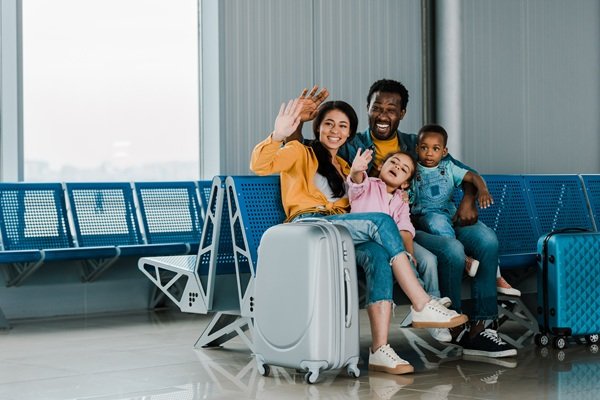

Family Travel Guide livlesstravel — What U.S. Families Need to Know Before They Go

The Henderson family from Nashville had been planning their first international trip for two years. Two kids, ages seven and eleven. A spreadsheet with forty-three rows. Hotel reservations that couldn’t be changed. A day-by-day itinerary that left exactly twelve minutes for lunch on day three. By day two of the actual trip, the seven-year-old had a meltdown in a museum, the eleven-year-old was bored, and both parents were quietly wondering if they could expense a hotel room just for themselves. Sound familiar? It should. Because this is how most U.S. families travel — and it’s exactly what the family travel guide livlesstravel philosophy exists to fix.
Here at MyTravelTweaks.com, I’ve spent years collecting what actually works for traveling families versus what looks good in theory. The family travel guide livlesstravel framework has emerged as one of the more grounded, practical approaches for U.S. families who want real trips — not curated performances of vacations.
What the Family Travel Guide livlesstravel Philosophy Actually Is
livlesstravel is built on a premise that sounds simple but runs counter to almost everything U.S. travel culture promotes — that living with less structure, less stuff, and less pressure produces better family travel experiences, not worse ones.
“Liv less travel” doesn’t mean doing less or going fewer places. It means traveling with less friction — fewer non-negotiable bookings, fewer overpacked bags, fewer scheduled hours that leave no room for what actually matters to the specific family doing the traveling.
The numbers back this up. According to a 2023 Family Travel Association report, 72% of U.S. parents describe family vacations as moderately to highly stressful, with itinerary management and children’s differing needs cited as the top two stress drivers. The family travel guide livlesstravel approach directly targets both.
The Core Framework — Built for Real Families
What separates the family travel guide livlesstravel method from generic travel advice is its insistence on building the trip around the actual children in your family — not the idealized children in travel brochures.
Here is the framework broken into actionable parts:
Age-calibrated activity selection. A seven-year-old and a fourteen-year-old are not the same traveler. The livlesstravel family travel guide approach starts with honest assessment of each child’s interests, attention span, and physical stamina — and builds the activity shortlist from there rather than from a top-ten list for the destination.
The two-anchor rule. Book two non-negotiable experiences per destination — the things that genuinely matter to your family — and leave the rest of the days open to what the trip reveals. This eliminates the anxiety of missed reservations without sacrificing the highlights.
Pack for the trip you’re taking, not the trip you might take. The livlesstravel philosophy applies minimalist packing principles to family travel — a genuinely radical act when traveling with children. The target is carry-on only for each family member over the age of eight, with a single checked bag for the full family unit rather than individual checked bags per person.
Buffer time as a non-negotiable line item. Every day in the family travel guide livlesstravel framework includes unscheduled buffer — a minimum of two hours that belongs to whoever needs it. Sometimes that’s a tired parent. Sometimes it’s a kid who found a playground they don’t want to leave. Buffer time is not wasted. It is often the best part of the day.

The Henderson Family — Six Months Later
I checked back in with the Henderson family from Nashville after their second international trip — the one they planned using the family travel guide livlesstravel approach.
Rachel Henderson wrote to me:
“The difference was almost embarrassing. We booked two things in advance — a cooking class and a boat tour the kids had specifically asked for. Everything else was a list. We ended up spending an entire unplanned afternoon at a local market because our eleven-year-old got fascinated by a spice vendor who was incredibly patient with her questions. That afternoon is what she talks about when people ask about the trip. It cost nothing and it wasn’t on any itinerary. livlesstravel gave us permission to let that happen.”
Rachel’s point about permission is one I hear repeatedly from families who shift to the livlesstravel approach. The cultural pressure to maximize every travel dollar and every vacation hour is enormous. Giving yourself explicit permission to slow down is not laziness — it is the actual work of family travel done well.
Accommodation Strategy for livlesstravel Families
Where your family sleeps shapes the entire energy of the trip. The family travel guide livlesstravel approach is specific about accommodation priorities — and most of them run counter to what hotel booking algorithms push to the top of results.
Space over amenity lists. A two-bedroom apartment rental that gives each child their own sleep space and the family a shared kitchen will almost always produce a better trip than a single hotel room with a better pool. Family members who sleep well travel better the next day. This is not negotiable.
Location over star rating. Being walkable to the main area of activity reduces transportation logistics, eliminates car rental stress in unfamiliar cities, and means a tired seven-year-old can be back in bed within ten minutes rather than forty-five. The livlesstravel family travel guide consistently prioritizes location score over amenity score when evaluating accommodation.
Flexible cancellation as a non-negotiable. Children get sick. Weather changes plans. The family travel guide livlesstravel approach treats non-refundable bookings as a last resort rather than a default money-saving move. The anxiety cost of a non-refundable booking with a family is almost always worth more than the price difference.
For rate research, I use traveltweaks alongside ttweak.com and traveltweak.com when building family accommodation shortlists — particularly for apartment-style properties and boutique family hotels that don’t always surface prominently on major OTAs. The wholesale rate access on traveltweaks has consistently found family-appropriate properties at 15 to 30% below standard listing prices.
Packing the livlesstravel Way With Kids
The single most common response I get when I suggest carry-on only family travel is “that’s impossible with kids.” It is not impossible. It requires a different packing mindset.
The family travel guide livlesstravel packing framework starts with a subtraction exercise rather than an addition one. Instead of listing everything you might need, start with a fully packed bag and remove everything that falls into the “just in case” category. Most families find they remove 30 to 40% of what they initially packed.
Children over eight can carry their own pack with their own responsibility items — water bottle, entertainment device, one change of clothes, personal care basics. This is not just logistically useful. It builds travel confidence and ownership in kids who then become genuinely better travel companions.
FAQs About Family Travel Guide livlesstravel
Q: Is the livlesstravel approach realistic for families with toddlers or infants? Yes, with modifications. The core principles — minimal bookings, buffer time, flexible accommodation — apply even more urgently with very young children. The packing minimalism requires adjustment since infants have non-negotiable gear requirements, but the framework still reduces overall trip stress significantly.
Q: How do you handle different children’s interests using the livlesstravel method? The family travel guide livlesstravel approach suggests one anchor experience per child per destination — something each child specifically requested. Beyond those anchors, the open itinerary allows the trip to naturally move toward what each family member is responding to on a given day.
Q: Does livlesstravel work for road trips as well as international travel? Absolutely. The principles transfer directly to domestic road trips — possibly even more effectively, since road trips inherently allow for the spontaneity and flexibility that livlesstravel prioritizes. The two-anchor rule works particularly well for multi-stop road trip planning.
Q: How do you manage children’s screen time using the livlesstravel approach? The livlesstravel philosophy doesn’t prescribe screen time rules — but the buffer time and open itinerary structure naturally reduce screen dependency because children are more frequently engaged with the actual environment around them rather than waiting through scheduled transitions.
Q: What age is ideal to start traveling with children using the livlesstravel framework? There is no minimum age. The framework scales to the children you have. Many families report that starting the livlesstravel approach when children are young builds travel habits and adaptability that make subsequent trips progressively easier as kids grow.

The Trip Your Family Actually Remembers
The best family travel guide livlesstravel insight I’ve encountered in years of covering this approach came from a reader who put it plainly: “My kids don’t remember the attractions. They remember how we were together.”
That’s the whole argument. The family travel guide livlesstravel method is not about doing less — it’s about being more present for what you do. Fewer non-negotiables. More margin. One bag each. Two anchors per destination. Buffer time every single day.
The Hendersons are already planning their third trip.
At MyTravelTweaks.com, I’ll keep updating this guide as the livlesstravel community grows and the practical toolkit evolves. Because family travel done well is one of the most worthwhile things a family can invest in — and it doesn’t require a forty-three-row spreadsheet to get there.
Keep exploring: easy traveling with CwBiancaVoyage, cheapest places to travel in January, August travel destinations, vacation spots near you.
Further reading: travel guidebooks explained; Lonely Planet travel guides.



Pingback: Easy Traveling cwbiancavoyage — A Real Guide for Americans Who Want Simpler Trips - My Travel Tweaks