
The Travel Car Seat Guide Every U.S. Parent Needs Before the Next Family Trip
The first time my sister flew with her 18-month-old, she gate-checked the family’s full-size convertible car seat — the big, heavy one — and watched it come off the baggage carousel with a cracked shell. She used it anyway on the rental car leg of the trip because she had no backup plan. She has never made that mistake again.
A good travel car seat is one of those purchases that feels optional right up until the moment it isn’t. Here’s everything you need to know before your next family flight.
What is a Travel Car Seat?
A travel car seat is a child passenger safety device designed to be light and narrow enough to fit in a travel bag and to fit into a rental car or ride share, without the need for a second mortgage to replace in case of a careless baggage handler.
The main difference is the car seat’s weight and width. The weight of standard convertible car seats ranges from 20 to 30 pounds and are 19 to 22 inches wide. A good travel car seat is usually less than 15 pounds and less than 18 inches wide — which is crucial when traversing a crowded jet bridge with a child on your hip.
The FAA Approval Label — What It Means and Why It Matters
The FAA recommends keeping children under 40 pounds in an approved child restraint system during flight — not a lap belt, and not a parent’s arms. The label you’re looking for reads: “This restraint is certified for use in motor vehicles and aircraft.”
Flight crews may deny the use of a non-approved seat — choosing one with the FAA label ensures you won’t be asked to gate-check it unexpectedly. That matters more than it sounds. A gate-checked car seat goes into the cargo hold with no guarantee of gentle handling. Your checked, paid-for seat stays with you in the cabin.
The Seats Worth Knowing About in 2026
There is no single best travel car seat for every family. It depends on your child’s age, your travel frequency, and your budget. Here are the most consistently recommended options:
WAYB Pico — At just 8 lbs, the Pico is among the lightest foldable, FAA-approved travel car seats. It folds down into carry-on size and includes a backpack-style bag. It fits in the overhead bin — a feature parents who’ve dealt with gate-check anxiety will immediately appreciate. At around $450, it’s the premium option.
Cosco Scenera NEXT — Because of its light weight and budget-friendly price tag, the Cosco Scenera NEXT is a popular travel car seat choice for parents. Weighing around 10 lbs, it’s an affordable, FAA-approved convertible seat highly praised by travel parents for being lightweight and practical. It runs under $60 and is the most budget-accessible FAA-approved option on the market.
Safety 1st Guide 65 — It’s affordable, lightweight, comfortable, narrow and FAA approved — at only 12 pounds — making it a strong mid-range pick for parents who want more padding comfort than the Scenera provides without paying WAYB Pico prices.
Doona Infant Car Seat — The Doona infant car seat converts into a stroller — it’s FAA-approved and narrow enough for airline seats. For parents of newborns and young infants, this two-in-one function eliminates the need for a separate stroller at the destination.
The Width Rule That Most Parents Miss
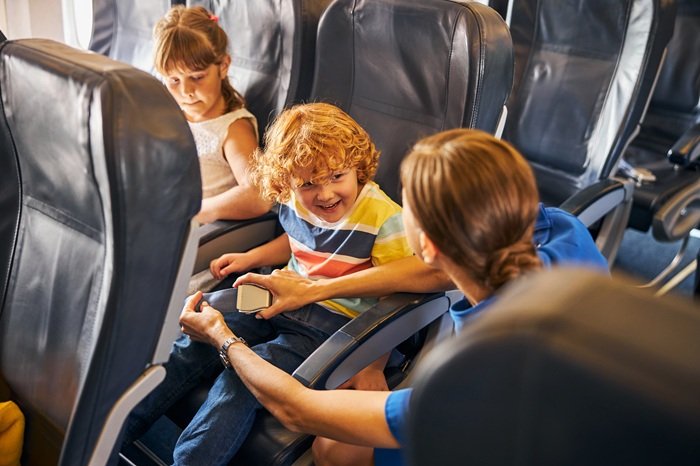
Airline seats are notoriously narrow. Look for a travel car seat under or about 17 or 18 inches wide to ensure the best fit. A seat that technically fits but presses into the armrest makes installation difficult, blocks access to tray tables, and can irritate fellow passengers on longer flights.
Before you buy, measure the width of a standard economy seat on your planned airline — most run between 17 and 18.5 inches wide. Then compare that to your seat’s published width. This five-minute check before purchase saves a real headache at 30,000 feet.
One more practical note: always install your travel car seat in a window seat. FAA guidelines and common sense both point the same direction — window seats allow proper installation without blocking aisle access for other passengers and crew.
Should You Rent Instead of Bringing Your Own?
Bringing your own car seat ensures it meets your safety standards and is familiar to your child. Renting may be convenient, but there’s no guarantee of the seat’s condition or suitability.
Rental car company seats are often older, may have been in unreported accidents, and almost never come with the instruction manual or manufacture date — information you need to verify a seat hasn’t expired. Car seats have expiration dates, typically six to ten years from manufacture, printed on the base or shell. A rental seat of unknown age is a genuine safety unknown.
For trips longer than a week, bringing your own travel car seat almost always wins the cost-benefit calculation once you factor in daily rental fees, which average $13 to $15 per day at major rental agencies.
Real Parents Real Experience
We bought the WAYB Pico for our daughter’s 2nd Birthday Florida trip because it fits in the overhead bin, gets to the plane in minutes with no hassle and fits our rental car perfectly. I’ve recommended this to all parents I know who are traveling with a toddler.
— Jessica M., Denver mom of 2
I’d recommend the Cosco Scenera NEXT to any first time flying parent: under $60, FAA approved, and 10 pounds — I carried it in three airports with my son, and it never was an inconvenience.
— Kevin T., father, Atlanta:
Frequently Asked Questions
Q: Does my child need their own airplane seat to use a travel car seat?
Yes. A travel car seat must be installed in a ticketed seat — it cannot be used on a lap. You’ll need to purchase a seat for your child to bring and use a car seat onboard.
Q: What is the FAA label I should look for on a travel car seat?
Look for a label that reads: “This restraint is certified for use in motor vehicles and aircraft.” Without this label, the airline can require you to gate-check the seat before boarding.
Q: Can a travel car seat fit in the overhead bin?
Most cannot, but some — like the WAYB Pico — are specifically designed to fold down to carry-on size and fit in the overhead bin. Always confirm dimensions against your airline’s carry-on size limits before assuming.
Q: How wide should a travel car seat be for most U.S. airline seats?
Look for seats at or under 17 to 18 inches wide. Most economy seats on major U.S. carriers measure between 17 and 18.5 inches wide. Going narrower gives you more margin during installation.
Q: When does a car seat expire?
Most car seats expire six to ten years from the date of manufacture. The expiration date is printed on the base or rear shell of the seat. Never use a seat past its expiration date or one that has been in a vehicle accident.
Q: Is a travel car seat worth it for just one or two trips a year?
For most families, yes — especially when you factor in rental seat quality concerns and daily rental fees averaging $13 to $15 per day. After two or three trips, a mid-range travel car seat like the Cosco Scenera NEXT pays for itself.
The Bottom Line
A good travel car seat doesn’t have to be expensive, but it does have to be right — right weight, right width, right certification, right age range for your child. The FAA recommends it. Safety experts recommend it. And any parent who has watched a full-size seat come off a baggage carousel in pieces will tell you the same thing my sister told me: get the dedicated travel seat before you need to learn that lesson the hard way.